Seeing cracks and surface wear across your parking lot can make full replacement seem inevitable. But if the pavement underneath still provides adequate support, an asphalt overlay can resurface the lot while keeping serviceable pavement in place and reducing the amount of material that needs to be removed.
At PLM Paving, we help commercial property owners throughout Milwaukee, Waukesha, and southeastern Wisconsin determine what their pavement actually needs. This guide starts with a key question: Can your existing pavement support resurfacing, or does the damage point to a deeper problem? We’ll show you how your answer shapes the project, cost, and ongoing maintenance.
What Is an Asphalt Overlay?
An asphalt pavement overlay adds a new layer of asphalt over usable pavement. Depending on the lot’s condition, crews may repair damaged areas or mill portions of the existing surface before paving.
An overlay differs from parking lot sealcoating, which protects your asphalt surfaces from drying out and cracking due to oxidation from the sun. Thin asphalt overlays used for pavement preservation are intended for pavement in good-to-fair condition and perform poorly over structural failure or severe distress.
Standard Overlay vs. Mill and Overlay
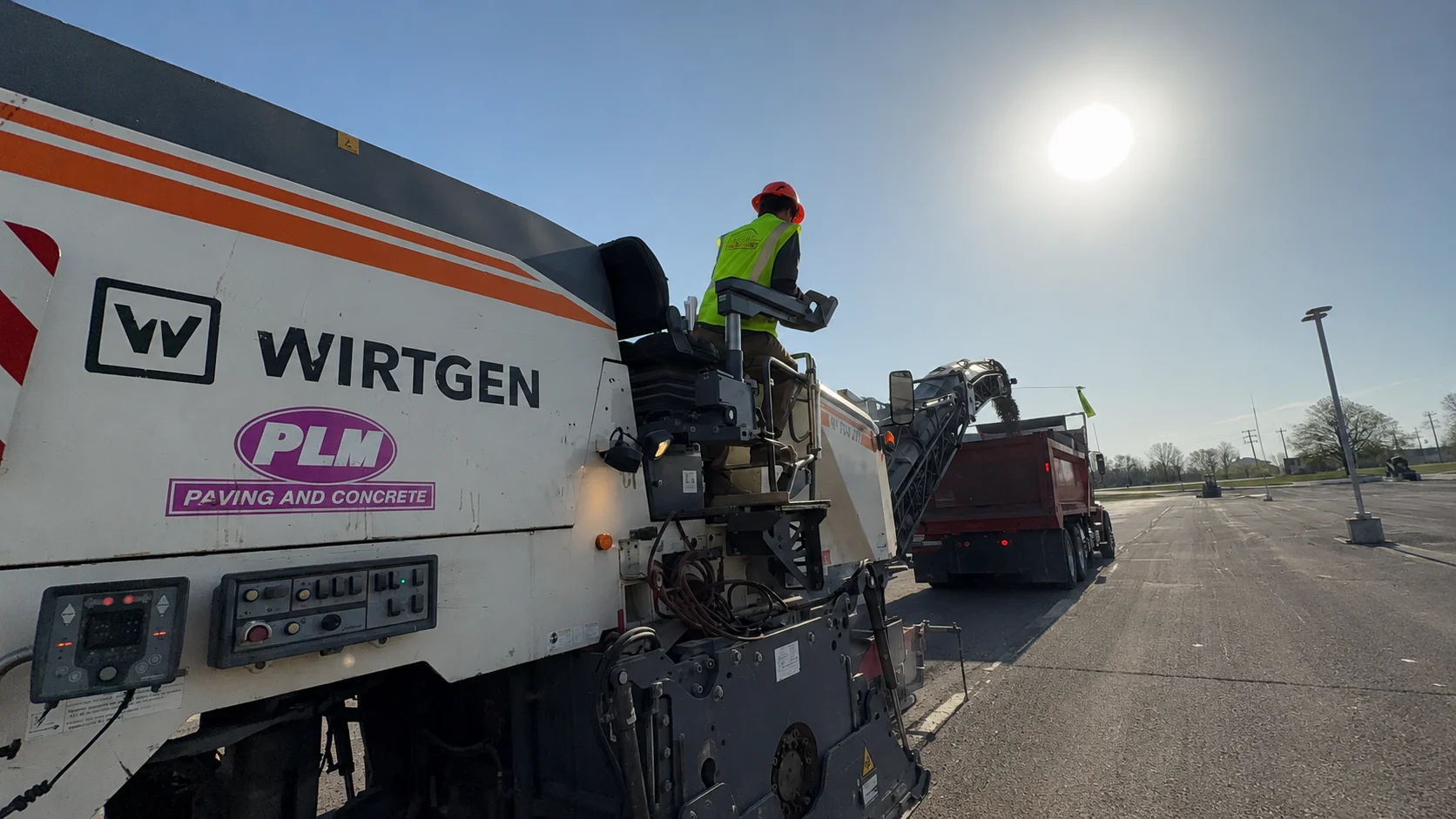
A standard overlay places new asphalt over the prepared pavement. An asphalt mill and overlay first removes a specified depth of the existing surface.
Milling helps maintain proper elevations at curbs, drains, entrances, and pavement transitions. Milling keyways also help tie new pavement into existing grades for smooth transitions. Depending on the project, we can combine asphalt milling with repairs to failed areas before paving.
How Is Asphalt Overlay Thickness Determined?
Overlay thickness depends on the existing pavement, expected traffic, asphalt mix, and available elevation. Truck routes and loading areas may require a different pavement design than areas used mainly by passenger vehicles.
Our typical process includes milling approximately 1½ to 2 inches and installing 1½ to 2 inches of compacted hot-mix asphalt. Final thickness depends on your lot’s conditions and demands.
When Does an Asphalt Overlay Make Sense?
Signs Your Parking Lot May Be a Good Candidate
- Surface Wear: Oxidation or raveling while the pavement below remains serviceable.
- Localized Damage: Isolated failed areas that can be repaired before resurfacing.
- Workable Drainage and Elevations: Curbs, catch basins, entrances, and adjoining surfaces that can accommodate the finished pavement.
- Manageable Cracking: Cracks that are treatable based on their pattern, severity, and cause.
When More Extensive Repairs or Replacement Make Sense
Widespread fatigue cracking, recurring settlement, unstable areas, or drainage problems may require more than an overlay. Localized failures can often be reconstructed, while extensive deterioration may call for broader replacement.
Existing pavement layers can also limit another overlay by raising elevations around curbs, drains, and entrances. If subsurface conditions are unclear, further investigation may be needed before choosing an approach.
| Decision Factor | Asphalt Overlay | Full Replacement |
|---|---|---|
| Existing Pavement | Retains pavement that can still provide support | Removes existing asphalt |
| Best Fit | Surface deterioration with repairable problem areas | Widespread failure or deeper structural problems |
| Drainage & Elevations | Must work within existing site conditions | Allows more extensive corrections |
| Upfront Cost | Typically involves less removal and reconstruction | Includes a larger scope of removal and rebuilding |
| Disruption | Can reduce the amount of demolition required | Requires removal before new pavement is installed |
| Long-Term Value | Preserves usable pavement rather than replacing it early | Addresses pavement that can no longer support resurfacing |
Planning Maintenance After Resurfacing
After asphalt resurfacing, keep drainage areas clear and watch for developing pavement damage so you can address small problems before they spread.
Treatments such as sealcoating should follow the timing recommended for the pavement and product being used. Ongoing maintenance helps protect the resurfaced lot, but performance also depends on traffic, drainage, weather, and the condition of the pavement underneath.
How the Asphalt Overlay Process Works
Step 1: Assess the Lot and Plan the Work
The asphalt overlay process starts with an evaluation of pavement damage, drainage, elevations, traffic loads, and site access. For commercial properties, the paving plan also accounts for entrances, pedestrian routes, accessible parking requirements, and phasing when needed to maintain business and delivery access.
Step 2: Prepare, Repair, and Mill Where Needed
Crews clean the pavement and address failed areas before the overlay. Preparation may include crack treatment, milling, base repairs, drainage work, or adjustments around adjoining surfaces, depending on the lot’s condition.
Step 3: Apply Tack Coat, Pave, and Compact
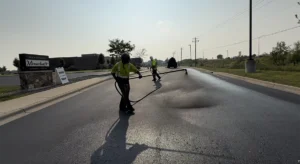
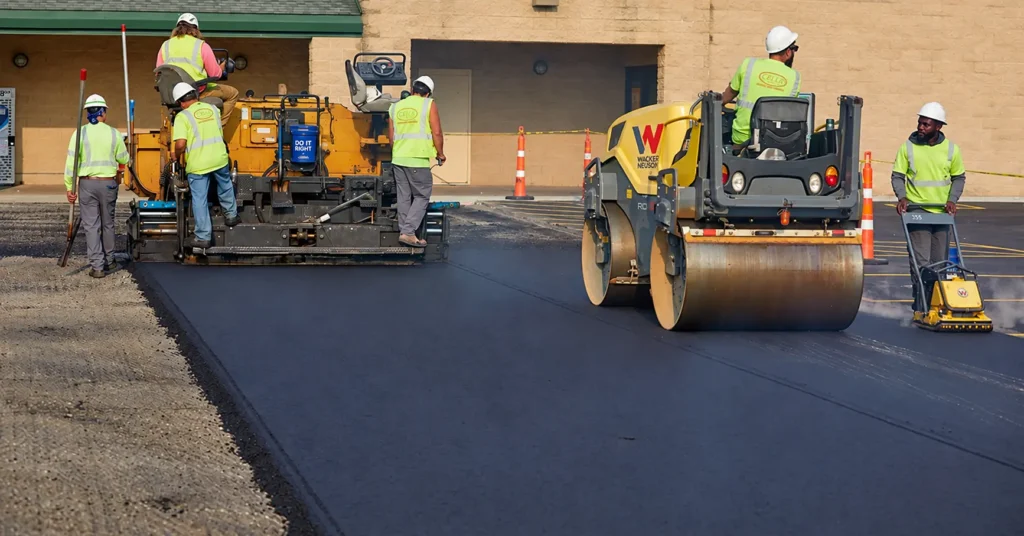
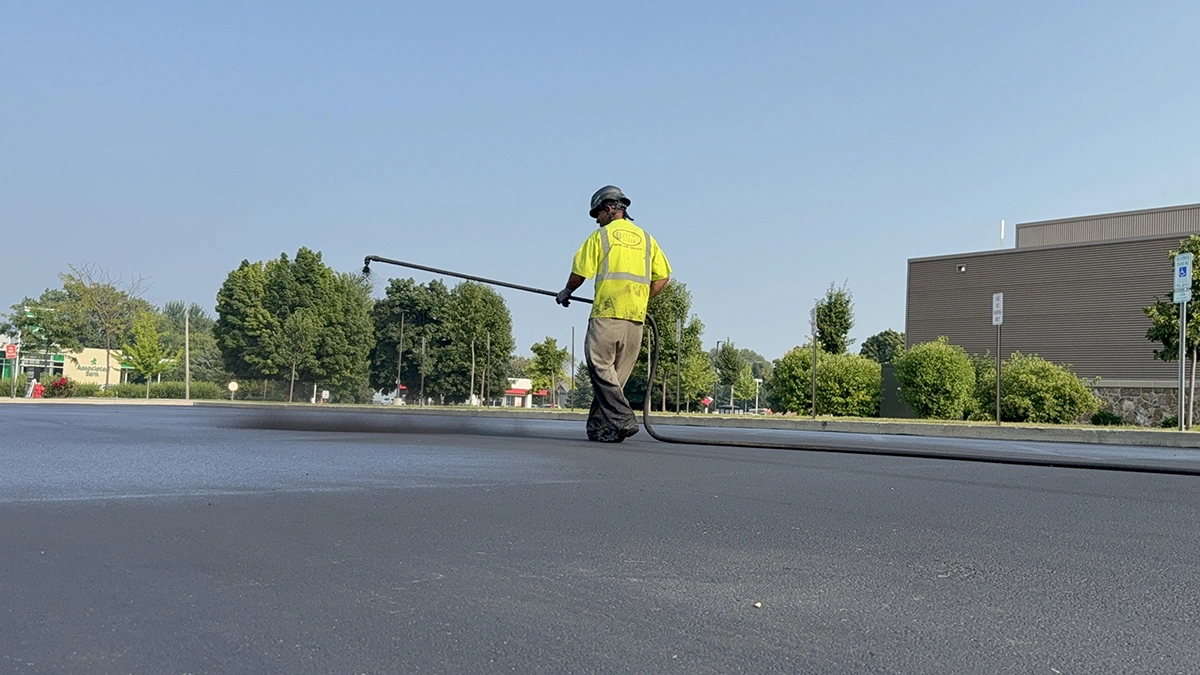
A tack coat helps bond the new asphalt to the prepared surface before crews install and compact the hot-mix asphalt. Proper tack coat application helps prevent poor bonding that leads to slippage, delamination, fatigue cracking, and potholes. Crews also account for weather, pavement temperature, and site conditions as they place and compact the new asphalt.
Step 4: Complete Markings and Confirm Reopening
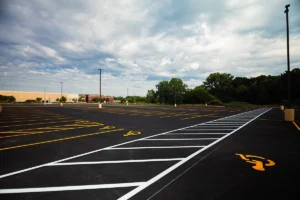
After paving, crews complete striping, transitions, drainage checks, and any specified accessibility work. Before reopening the lot, you’ll also receive guidance on when it can resume handling regular traffic, heavy vehicles, or stationary loads.
What Affects Asphalt Overlay Cost in Wisconsin?
- Size and Layout: Total paved area, lot geometry, site access, and project phasing affect labor and equipment needs.
- Overlay Specifications: Compacted thickness, asphalt mix, and material quantity affect how much material the project requires.
- Preparation and Repairs: Milling, base repairs, drainage corrections, transitions, and other prep work add to the project scope.
- Finishing Work: Account for striping, traffic control, and other site-specific work in the estimate.
- Project Logistics: Material availability, hauling distance, and scheduling can also affect the final cost.
What to Ask for in an Overlay Proposal
Your proposal should specify the compacted asphalt thickness, materials, surface preparation, milling or repairs, drainage work, striping, traffic control, closures, reopening guidance, exclusions, and warranty terms.
At PLM Paving, we evaluate your existing pavement before recommending an overlay, targeted repairs, or more extensive commercial asphalt paving. Our proposed work reflects your lot’s actual condition rather than taking a one-size-fits-all approach.
FAQs
How Long Does an Asphalt Overlay Last?
The lifespan of an asphalt overlay varies by project. Its lifespan depends on the condition of the pavement underneath, installation, traffic loads, drainage, and ongoing maintenance.
Can You Put an Asphalt Overlay Over Cracked Pavement?
In some cases, yes. First, you need to evaluate the cause and severity of the cracks, and you may need repairs or crack treatment before paving. An overlay is generally not the right fix for pavement with unstable support or widespread structural failure.
What Is the Difference Between Mill and Overlay and a Standard Overlay?
A standard overlay adds new asphalt over the prepared pavement. A mill and overlay first removes a specified depth of existing asphalt, which helps manage elevations and transitions before installing the new surface.
How Thick Should an Asphalt Overlay Be?
Thickness depends on the existing pavement, traffic, asphalt mix, and available elevations. Your proposal should identify the compacted thickness and explain why it makes sense for your lot.
When Can Asphalt Overlay Work Be Done in Wisconsin?
Asphalt needs suitable pavement and weather conditions for proper placement and compaction. Temperature, moisture, layer thickness, and the paving plan all affect scheduling, so confirm the work window for your specific project.
Find the Right Resurfacing Solution for Your Parking Lot
Surface wear does not always mean your parking lot needs full replacement. If the pavement still has adequate support, an asphalt overlay may be a practical way to restore the surface while keeping serviceable pavement in place.
At PLM Paving, we’ll evaluate your lot and determine where resurfacing, targeted repairs, or reconstruction make sense.