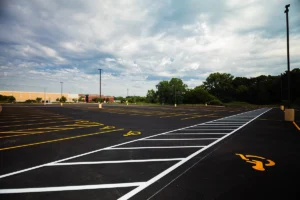

Parking lots and roadways take a beating – heavy traffic, harsh Wisconsin winters, and constant
freeze-thaw cycles can wear down even the best asphalt. At PLM Paving and Concrete, two of the most common maintenance solutions we recommend are crack sealing and infrared asphalt patching.
Both methods extend the life of your pavement, but they solve different problems. So how do you know which repair is right for your lot? Let’s break it down. If you own or manage a property, here’s what you need to know about ADA parking lot compliance and how our paving experts can help you stay on the right side of the law while keeping your lot welcoming and professional.
What Is Crack Sealing?
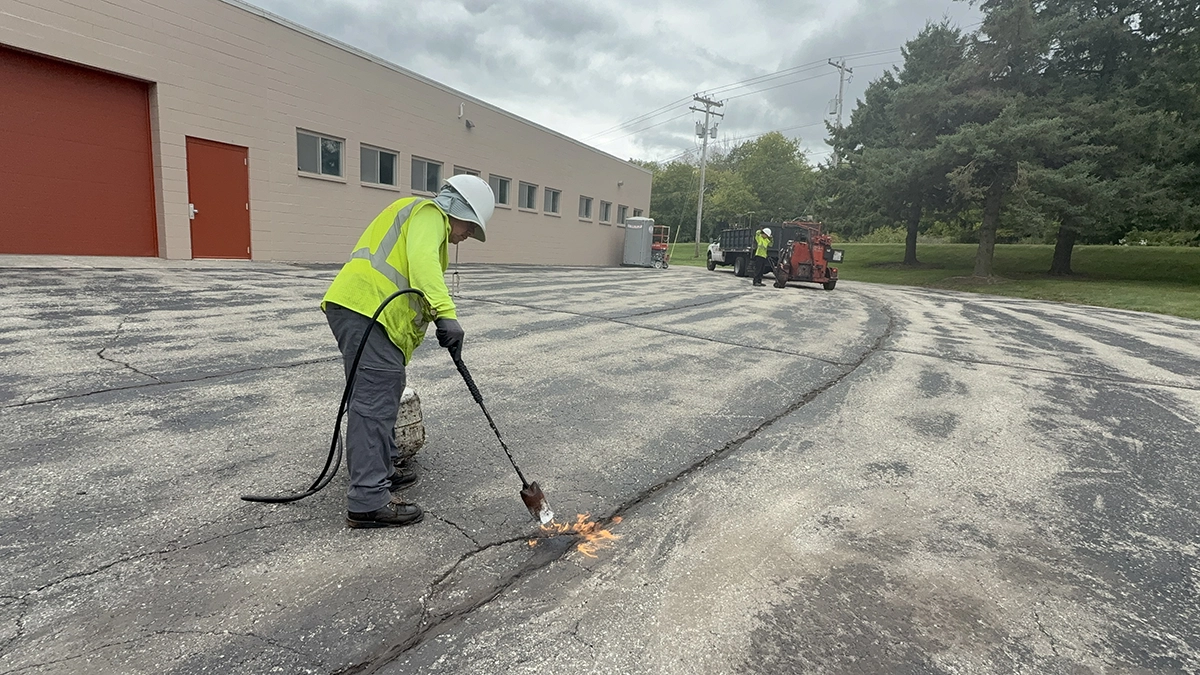
Crack sealing is a preventative maintenance technique that fills and seals small cracks in your asphalt.
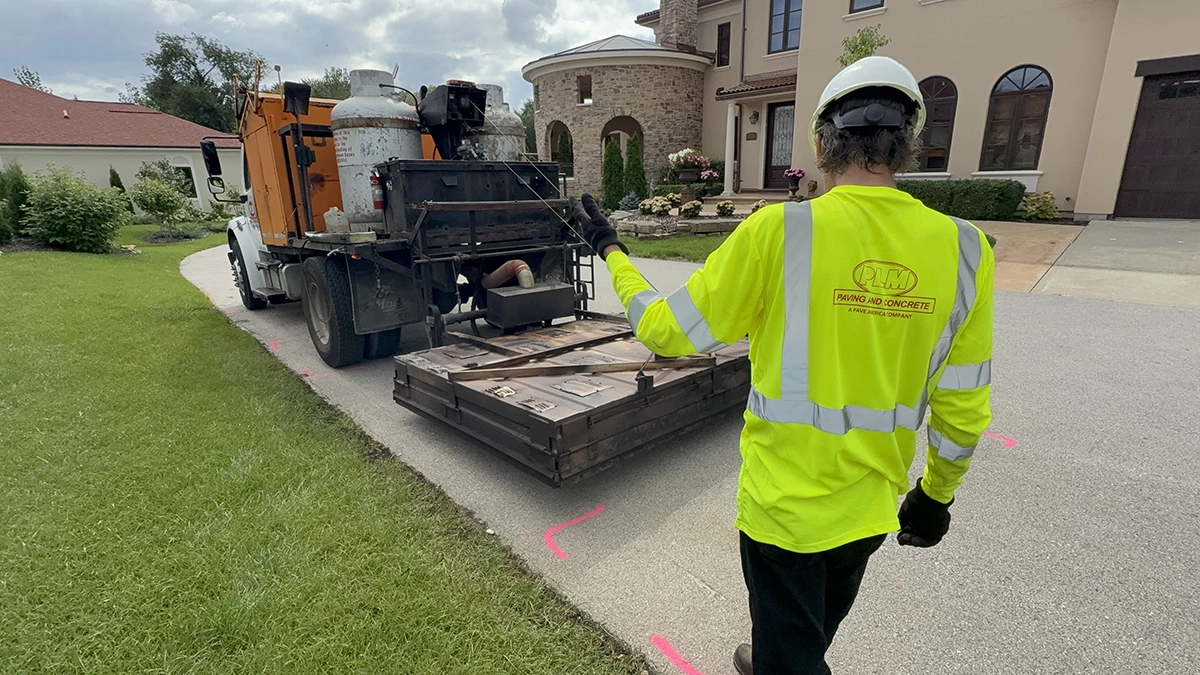
- How it works: A specialized rubberized sealant is heated and applied into cracks to keep water, debris, and chemicals out.
- Best for: Long, linear cracks caused by pavement movement or seasonal temperature changes.
- Benefits:
- Stops water from penetrating the base layer
- Prevents cracks from spreading into potholes
- Extends the life of your asphalt
- Cost-effective and fast
Think of crack sealing like putting a protective bandage on your pavement – it stops small issues before they turn into big, expensive problems.
What Is Infrared Asphalt Repair Patching?
Infrared repair patching is a specialized method used to fix localized pavement failures, like potholes or deteriorated spots.
How it works: Infrared heaters warm the existing asphalt, softening it so fresh hot mix can be blended in. The repair is then compacted for a seamless finish.
- Best for: Potholes, birdbaths (low spots where water pools), utility cuts, or heavily damaged sections of asphalt.
- Benefits:
o Creates a thermal bond with existing asphalt (no cold seams)
o Produces a smooth, watertight finish
o Faster and less disruptive than full removal and replacement
o Environmentally friendly – reuses existing asphalt material
Infrared patching is like surgical repair – it removes damaged sections and seamlessly restores the surface without replacing the whole area.
Crack Sealing vs. Infrared Repair: How to Choose
Here’s a quick comparison to help you decide:
| Repair Method | Best For | Longevity | Cost | Goal |
|---|---|---|---|---|
| Crack Sealing | Small cracks before they spread | 2-5 years (with upkeep) | Budget-friendly | Prevent water & damage spread |
| Infrared Repair | Potholes failed sections | 3-7 years (with upkeep) | Moderate | Restore structure & smooth surface |
Rule of thumb:
- If your lot has small cracks = choose crack sealing.
- If you’re dealing with potholes, low spots, or surface failure = go with infrared patching.
Why Choose PLM Paving and Concrete
At PLM Paving and Concrete, we don’t believe in one-size-fits-all solutions. Our team will inspect your parking lot, identify the root cause of the damage, and recommend the right repair method to maximize your investment.
- Crack Sealing – Quick, affordable, and preventative.
- Infrared Asphalt Repair – Seamless, durable, and long-lasting.
- Maintenance Plans – Combine both methods for the best results.
The Bottom Line
Every parking lot eventually needs maintenance – the key is knowing whether your asphalt needs protection (crack sealing) or repair (infrared patching). Either way, PLM Paving and Concrete has the expertise, equipment, and crew to get the job done right.
Contact PLM Paving and Concrete today to schedule a pavement assessment and find out which repair method your lot needs.